Services
A second opinion with nothing to sell you afterwards
Three ways to buy the same thing: judgement on the decisions that are expensive to get wrong. Sixteen years and forty-plus production deployments behind it, and none of the three ends with me quoting for the build.
Three ways to work together
Ordered by what they cost you, cheapest first. Most people should start at the top — that is an opinion, and it is in this sentence rather than in a highlighted box, because a highlighted box is a recommendation you cannot argue with.
-

A workshop
One or two days with the people who will still be maintaining this after I leave.
Your system, your data, your evaluation harness — not slides. We install the measurement together, calibrate the judge against an answer key you agree with, and grade something you actually shipped. You leave running it yourselves, which is the point: the tool is free and public, so the two days are the only thing being bought.
- TimeOne or two days
- TermFixed. No follow-on
- You keepA harness your team runs
-
A fixed engagement
One question, answered on the record, with a start and an end rather than a cadence.
An architecture review, a benchmark run against your own data, a data foundation assessed before anything is built on it, or a business case taken apart before someone signs for it. It ends in a written finding with the method attached, so your team can act on it without me in the room — and so you can check the working rather than take the conclusion.
- TimeThree to six weeks
- TermOne question, fixed scope
- You keepA finding, and its method
-

A monthly retainer
The standing second opinion on a programme that is already running.
Roughly ten hours a month against the four questions above, on whatever is in front of you that month — an architecture that has started to wobble, a vendor claim nobody can check, a board paper due Thursday. One quarter first, because a quarter is long enough to be useful and short enough to leave.
- Time~10 hours a month
- TermOne quarter, then rolling
- You keepJudgement, on the record
True of all three
The practical facts are the same whichever way you buy — where I am, how soon I can be in it, and what you are left holding when it ends. What I will not take on is further down, in its own words.
- Based in Thailand, GMT+7
- Start Typically two to three weeks
- You keep The method, not just the answer
No rate card. I would rather quote against the actual problem than anchor on a figure I invented before hearing it. The first call costs nothing and ends with either a scope or an honest reason not to bother.
Four questions that are expensive to get wrong
The same four whichever way you buy. The working for each is already published — this is the page with the most incentive to overstate, so nothing on it is asserted here for the first time.
Will it hold at your scale?
Per-step accuracy multiplies. Chain ten steps at 85% each and end-to-end success is 20% — and the figure in the vendor deck is the per-call one. The work is measuring the chain you actually deployed, then deciding whether to shorten it, checkpoint it, or stop it.
Is there anything underneath it?
Most agent programmes fail on the data, not the model. Three columns named revenue, three different meanings, and an agent picking one with complete confidence — that is not a hallucination problem, it is a vocabulary problem. A catalogue tells you what data exists; it does not tell you what any of it means. The work is deciding what has to be true of your data before an agent is allowed to answer from it.
Can you account for it?
The EU AI Act’s high-risk rules never ask whether your agent is accurate. They ask for named human oversight, six months of logs and incident reporting — an account of what it did. Most deployments were not built to produce one, and a log is architecture rather than storage.
Is the number real?
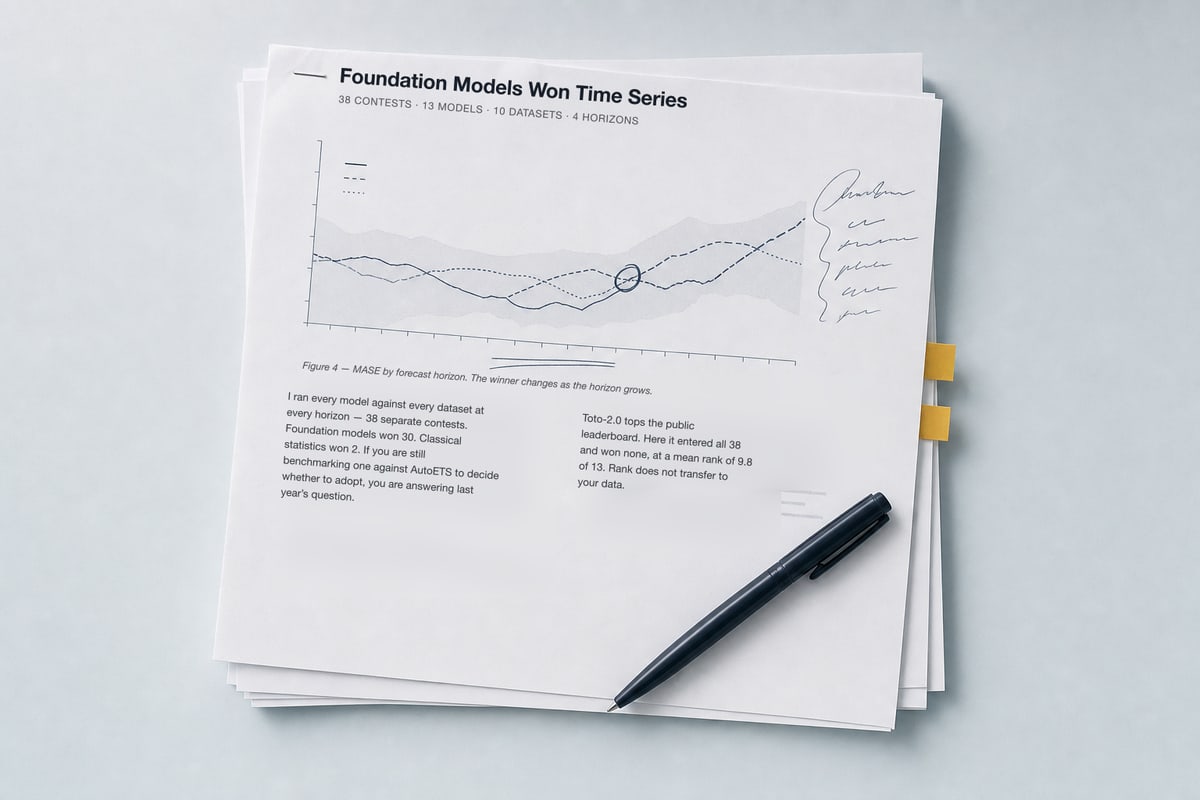
Business cases get built on figures nobody traced. I have defended $15M+ in ARR and $30M+ in realised AI value to the people who sign for it — and when I ran my own benchmark, the model topping the public leaderboard entered all 38 contests and won none. I published that result rather than the flattering one.
What I will not take on
Ordered by what each one costs me.
The delivery
I do not bid on the build — not on a retainer, not at the end of a workshop, not as the second phase of a review. Firms win delivery, they are better resourced for it, and an advisor whose next invoice depends on a yes is not giving you advice. Implementation stays with your team or your integrator, and I will tell you when you do not need either. If an engagement ends and the honest answer is that you can do this yourselves now, that is the engagement working.
ASEAN telecom operators
I do not take work with ASEAN telecom operators. It is a sector I have real operating history in, which is exactly what makes it the most expensive line on this list. Everything else is open — banking, insurance, retail, energy, healthcare, manufacturing, government and the public sector.
A decision that has already been made
If the strategy is signed and what is wanted is a name on the cover, I am the wrong person, and you would know it by the second month. I would rather say so in the first call than invoice for three of them.